International Women's Day
/March 8th is International Women’s Day (IWD). This day is celebrated annually around the world. It is a significant day that acknowledges women’s rights and the need to create equality for all, in addition to celebrating women’s and girls’ lives everywhere.
During World War I thousands of women factory workers went on the streets to demand bread and peace. Little did they know that their strike, which fell on March 8, 1917, would later become an internationally celebrated day around the world. There are different International Women’s Day traditions around the world, such as women receiving a half-day off work in China.
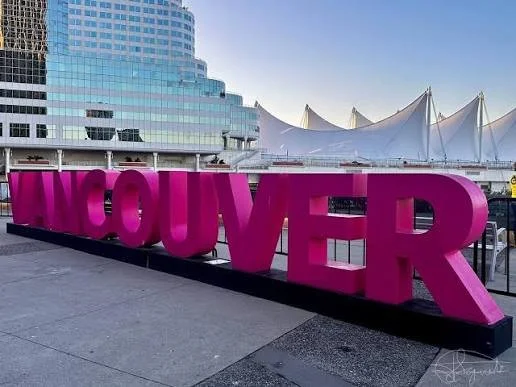
IWD will be celebrated in Vancouver on Sunday, March 8, 2026. The global theme for the year is "Balance the Scales", while many local events are adopting the theme #GiveToGain, emphasizing mentorship and advocacy.
Intersectional feminism: What it means and why it matters right now.
Vancouver events
Major Marches & Community Rallies
Vancouver International Women’s Day March: A grassroots, community-led march in partnership with the SFU Women’s Centre.
Date & Time: March 8, 2026, typically from 1:00 PM to 4:00 PM.
Location: šxʷƛ̓ənəq Xwtl'e7énḵ Square (outside the Vancouver Art Gallery).
Details: Features various speakers, live performances, and activities for children.
DIVERSEcity X Minerva Women’s Leadership Forum
The fourth annual DIVERSEcity x Minerva Women’s Leadership Forum is set for March 4, 2026, in celebration of International Women’s Day!
Five myths and facts you didn’t know about International Women’s Day
1. Inequality between genders isn’t a problem in Canada. (False)
There is a common misconception that countries such as Canada have reached gender-equality, but sadly this isn’t true. On the Global Gender Gap Index, Canada ranks 36th* out of 146 countries. In Canada, women in full-time employment earn 89 cents for every dollar men earn, and the number is even less for members of the LGBTQIA+ (Lesbian, Gay, Bisexual, Transgender, Queer, Intersex, and Asexual) community.
*The closer to one a country scores on the Global Gender Gap Index, the more gender equality has been achieved.
2. It’s just a day to celebrate women. (False)
While it is important to celebrate women and girls and recognize the inequalities they are facing, it is essential not to alienate our allies. Anyone should champion women’s rights, along with political, economic, personal, and social equality. Part of feminism is about dismantling harmful societal structures and rebuilding them in a fair and equitable way with a focus on women’s and girls’ rights. The goal is to reach equality between all people. To do so, we need everyone to care and create an environment that ensures everyone has equal opportunities.
3. Clara Zetkin created International Women’s Day in 1910. (True)
At an international event in 1910, Clara Zetkin, a German advocate and activist for women’s rights, raised the idea of an International Women’s Day at the International Conference of Working Women in Copenhagen. Her suggestion was backed unanimously by 100 women from 17 countries. The first International Women’s Day was celebrated in 1911 in Austria, Denmark, Germany and Switzerland.
4. International Women’s Day was first celebrated by the United Nations in 1975. (True)
International Women’s Day was officially celebrated in 1975 by the United Nations and named in 1977 following labour movements in North America and Europe in the 20th century. Since then, there have been four global United Nations women’s conferences.
5. It’s a day that focuses on women’s rights and celebrates the progress we’ve made. (True)
A lot of change is needed when it comes to gender equality. However, a lot of progress has been made internationally already, which is important to recognize too. Women and allies have worked incredibly hard to get to the point of feminism we are in.